Best Beginner Keyboards for Kids (2026): Budget Picks
The best beginner keyboard for most kids is the Yamaha PSR-E383 (61 touch-sensitive keys). The best budget keyboard for kids is the Casio CT-S200, and the simplest keyboard for young children is the Casio SA-76, which has mini keys sized for small hands. Check the current price on Amazon before you buy.
Quick Answer: Best Beginner Keyboards for Kids
- Best Overall: Yamaha PSR-E383 - Touch-sensitive keys, great features
- Best Budget: Casio CT-S200 - Portable, battery option, solid value
- Best for Young Kids: Casio SA-76 - Mini keys sized for small hands
Keyboard/piano is one of the best first instruments for kids. The visual layout makes understanding music theory intuitive, there's no tuning required, and kids can practice with headphones. Plus, piano skills transfer well to other instruments.
But with options ranging from $50 toy keyboards to $1000+ digital pianos, how do you choose? We've reviewed the best beginner keyboards to help you make the right choice for your child and budget.
Our Top Keyboard Picks
Types of Keyboards
Mini/Portable Keyboards (44-49 Keys)
Best for: Young children ages 3-7, portability, testing interest
- Smaller keys sized for small hands
- Very affordable ($50-100)
- Battery powered option for portability
- Limited range but fine for beginners
Standard Keyboards (61 Keys)
Best for: Most beginners, ages 6+, home practice
- Full-size keys
- Wide price range ($100-400)
- Many sounds and features
- Enough keys for most songs
Digital Pianos (76-88 Keys)
Best for: Serious students, ages 10+, those planning to study piano formally
- Weighted keys like acoustic piano
- Better sound quality
- Higher price ($300-1000+)
- Full range for classical music
Key Features to Consider
Touch Sensitivity
Touch-sensitive keys respond to how hard you press - play softly for quiet sounds, harder for loud. This is important for developing musical expression. Most keyboards $150+ have this feature. Non-touch-sensitive keyboards play the same volume regardless of how you press.
Our recommendation: Get touch sensitivity if budget allows, but it's not critical for absolute beginners.
Number of Keys
| Keys | Best For | Typical Price |
|---|---|---|
| 44-49 | Young kids (3-7), testing interest | $50-100 |
| 61 | Most beginners, learning songs | $100-300 |
| 76 | Intermediate players | $200-500 |
| 88 | Serious students, classical music | $300-1000+ |
Weighted vs Non-Weighted Keys
Non-weighted: Light, spring-action keys. Easier for young fingers, more affordable. Found on most keyboards under $300.
Semi-weighted: Middle ground, some resistance. Good compromise for beginners who may transition to piano.
Fully weighted: Feel like acoustic piano keys. Essential for serious piano students. Usually 88-key digital pianos, $300+.
Our Top Picks in Detail
Best Overall: Yamaha PSR-E383

Yamaha PSR-E383 61-Key Portable Keyboard
Yamaha's popular learning keyboard with touch-sensitive keys and hundreds of sounds. Perfect for beginners of all ages.
Pros
- Touch-sensitive keys
- 622 instrument voices
- Built-in lessons
Cons
- Stand sold separately
- Not weighted keys
The Yamaha PSR-E383 hits the sweet spot for serious beginners. Touch-sensitive keys let kids develop proper dynamics, and hundreds of instrument voices keep practice interesting. The Yamaha Education Suite provides structured learning, and USB connectivity allows for recording and app integration.
Why we love it: Excellent key feel for the price, quality Yamaha sound, room to grow, great learning features.
Best Budget: Casio CT-S200

Casio CT-S200 61-Key Portable Keyboard
Lightweight, portable keyboard perfect for kids. Battery powered option makes it great for playing anywhere.
Pros
- Very portable
- Battery powered option
- 400 tones
Cons
- Non-touch-sensitive
- Smaller keys
If you want a quality keyboard without spending $200+, the Casio CT-S200 delivers. It's incredibly lightweight and portable, runs on batteries for playing anywhere, and includes 400 tones to explore. The Dance Music Mode is a hit with kids.
Why we love it: Great value, extremely portable, battery option, fun features. Perfect for testing if your child enjoys keyboard.
Best for Young Kids: Casio SA-76
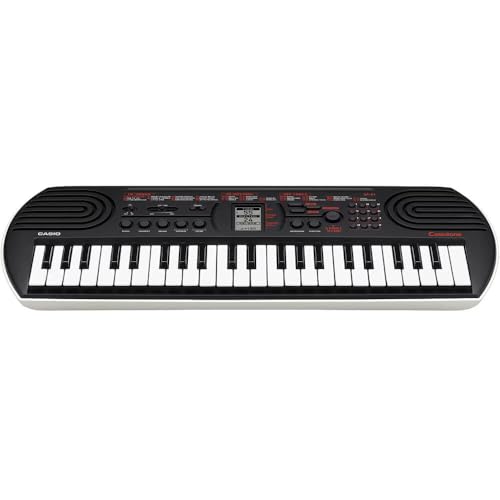
Casio Casiotone SA-81 44-Key Mini Keyboard
Perfect first keyboard for young children. Mini keys sized for small hands with fun sounds and rhythms.
Pros
- Mini keys for small hands
- Very affordable
- 100 tones
Cons
- Only 44 keys
- Not full-sized
For children ages 3-7, the Casio SA-76 with its mini keys is perfectly sized for small hands. It's very affordable, so you can test interest without a big investment. The built-in rhythms and sounds make it fun for young kids to explore.
Why we love it: Mini keys fit small hands, very affordable, 100 tones to explore, battery powered for portability.
Best for Serious Beginners: Donner DEP-20

Donner DEP-20 Beginner Digital Piano 88 Key
Full 88-key semi-weighted keyboard for those who want a piano-like experience at a fraction of the cost.
Pros
- 88 weighted keys
- Multiple sounds
- Sustain pedal included
Cons
- Needs stand
- Larger footprint
If your child is committed and you want an instrument that won't need upgrading, the Donner DEP-20 offers 88 semi-weighted keys at an affordable price. The sustain pedal is included, and it has a more authentic piano feel than standard keyboards.
Why we love it: Full 88 keys, semi-weighted action, sustain pedal included, great value for a near-piano experience.
All Beginner Keyboards Reviewed

Yamaha Arius YDP-184 Console Digital Piano
Yamaha's Clavinova series represents the pinnacle of digital piano technology. Features GrandTouch-S keyboard with wood keys, CFX and Bösendorfer Imperial grand piano samples.
Pros
- GrandTouch-S wooden keys
- CFX and Bösendorfer samples
- Advanced speaker system
Cons
- Significant investment
- Not portable

Nord Stage 4 Compact 73-Key
The legendary Nord Stage 4 is the choice of touring professionals. Combines piano, organ, and synthesizer in one powerful instrument with Nord's legendary red panel.
Pros
- Industry-leading piano sounds
- Incredible organ section
- Powerful synthesis
Cons
- Very expensive
- Learning curve

Roland FP-30X Digital Piano
Roland's SuperNATURAL Piano sound engine delivers incredible realism. PHA-4 Standard keyboard provides authentic weighted feel for serious practice.
Pros
- SuperNATURAL Piano engine
- Excellent key action
- Built-in Bluetooth
Cons
- Limited to 56 sounds
- No wooden keys
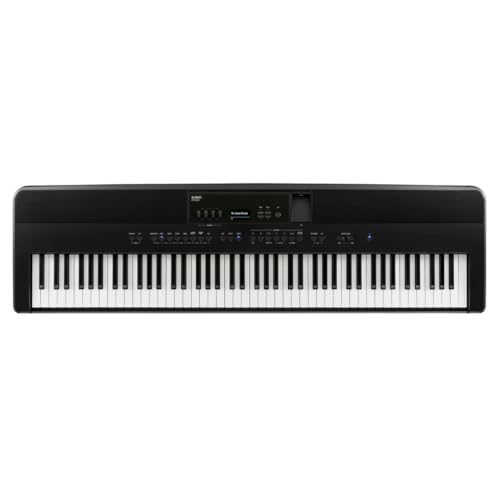
Kawai ES920 Portable Digital Piano
Kawai's flagship portable piano features their Responsive Hammer III action and Harmonic Imaging XL sound technology. Used by professionals worldwide.
Pros
- RHIII wooden-key action
- 88-key sampling
- Triple-sensor detection
Cons
- Premium price
- Heavy (40 lbs)

Casio Privia PX-S7000 Digital Piano
Casio's flagship portable piano combines Smart Hybrid Hammer Action with their best piano samples. Incredibly slim design makes it perfect for modern homes.
Pros
- Only 9.1 inches deep
- Smart Hybrid Hammer Action
- 400 tones
Cons
- Plastic key tops
- Speakers could be stronger
Yamaha PSR-E383 61-Key Portable Keyboard
Yamaha's popular learning keyboard with touch-sensitive keys and hundreds of sounds. Perfect for beginners of all ages.
Pros
- Touch-sensitive keys
- 622 instrument voices
- Built-in lessons
Cons
- Stand sold separately
- Not weighted keys

Yamaha P-225 88-Key Weighted Action Digital Piano
Yamaha's latest portable digital piano with GHS weighted action and CFX concert grand sound. Perfect for serious students and gigging musicians.
Pros
- Graded Hammer Standard action
- CFX concert grand samples
- Portable design
Cons
- Stand sold separately
- Only 24 voices

Korg SV-2 88-Key Stage Piano
Korg's SV-2 focuses exclusively on vintage keyboard sounds. From electric pianos to acoustic grands, this stage piano delivers authentic tones for performing musicians.
Pros
- 72 vintage keyboard sounds
- Real Weighted Hammer Action 3
- Tube-driven valve reactor
Cons
- Limited sound palette
- No synth engines

Yamaha MX88 88-Key Weighted Action Synthesizer
Yamaha's MX88 puts Motif-derived sounds under a full 88-key weighted action, a practical synth for players who also want a real piano feel.
Pros
- 88 weighted keys
- Motif-derived sound set
- Works as a controller for music software
Cons
- Complex for beginners
- Learning curve
Casio CT-S200 61-Key Portable Keyboard
Lightweight, portable keyboard perfect for kids. Battery powered option makes it great for playing anywhere.
Pros
- Very portable
- Battery powered option
- 400 tones
Cons
- Non-touch-sensitive
- Smaller keys

Yamaha PSR-E283 61-Key Portable Keyboard
Entry-level Yamaha keyboard with quality sound and Yamaha Education Suite for learning.
Pros
- Yamaha quality
- 401 voices
- Built-in lessons
Cons
- Non-touch-sensitive
- No USB MIDI
Donner DEP-20 Beginner Digital Piano 88 Key
Full 88-key semi-weighted keyboard for those who want a piano-like experience at a fraction of the cost.
Pros
- 88 weighted keys
- Multiple sounds
- Sustain pedal included
Cons
- Needs stand
- Larger footprint
Casio Casiotone SA-81 44-Key Mini Keyboard
Perfect first keyboard for young children. Mini keys sized for small hands with fun sounds and rhythms.
Pros
- Mini keys for small hands
- Very affordable
- 100 tones
Cons
- Only 44 keys
- Not full-sized
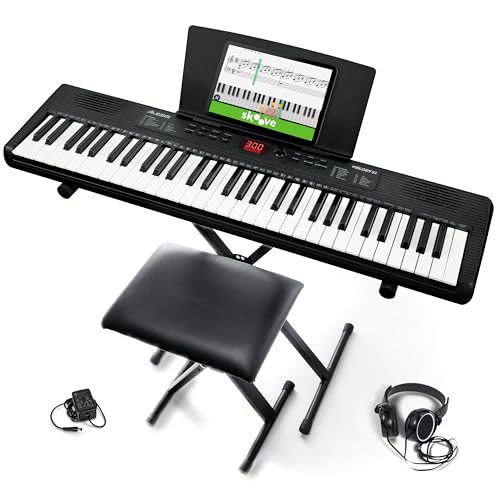
Alesis Melody 61 MK4 Keyboard Bundle
Complete keyboard bundle with stand, bench, headphones, and microphone. Everything needed to start playing.
Pros
- Complete bundle
- 300 sounds
- Lessons included
Cons
- Basic key action
- Bench is small
Setup Tips
Proper Height
The keyboard should be at a height where your child's forearms are parallel to the floor when playing. Elbows should be at about a 90-degree angle. A proper bench or adjustable chair is important.
Upgrade Pick and What You'll Also Need
Most keyboards ship with only a power adapter. These are the accessories teachers ask for, plus the step up once practice sticks.
- Keyboard stand: On-Stage KS7190 single-X stand sets the keys at the right height for a child or an adult.
- Bench: RockJam adjustable padded bench adjusts so forearms stay level with the keys.
- Sustain pedal: M-Audio SP-2 sustain pedal , a piano-style pedal most method books start using within the first year.
- Headphones: Audio-Technica ATH-M20x for quiet practice without disturbing the house.
- Upgrade pick: Yamaha P-225 88-key weighted digital piano when a student outgrows 61 keys; weighted keys build the finger strength a real piano needs.
Buying everything at once? Our keyboard and piano starter kits list the instrument and every accessory together, from budget to step-up.
Deal season note: Prices on these often drop during Prime Big Deal Days and Black Friday. The picks above were checked against live Amazon listings for 2026, so if a price looks different when you click through, the listing has changed since.
Learning Resources
Once you have the keyboard, here are the best ways to learn:
- Private lessons: Best for personalized feedback
- Online courses: Pianoforall, Simply Piano, Flowkey
- YouTube: Free tutorials for supplements
- Built-in lessons: Many keyboards include basic instruction
Alfred's Basic Adult All-in-One Piano Course
The top-rated beginner piano method book (under $25): lessons, theory, and technique in one self-paced course.
- Self-paced method book
- Lesson, theory, and technic in one
- Highly rated on Amazon
As an Amazon Associate, we earn from qualifying purchases.
Keyboard & Piano Resources
Budget & Brand Guides
We review them on their own too, in full detail: the Yamaha Arius YDP-145, the Casio Privia PX-770 and the Roland FP-10.
A metronome helps keyboard students keep time: see the best metronome for beginners. Torn between the two big brands? Read Yamaha vs Casio keyboard: which is better, then step up to the best digital piano under $500 when weighted keys matter.
Frequently Asked Questions
What is the best budget keyboard for kids?
The Casio CT-S200 is our best budget pick: it is light, runs on batteries, has 61 keys and covers beginner method books. Choose a 61-key model over a smaller toy keyboard if your child will take lessons. Check the current price on Amazon, and see our keyboard under $200 guide for more budget options.
What is the simplest keyboard for a young child?
For ages 3 to 6, a simple mini-key keyboard such as the Casio SA-76 is easiest because the small keys fit small hands and the controls are basic. Move to a 61-key full-size-key keyboard around age 6 or 7, or earlier if your child is taking lessons.
Which beginner keyboard is best for a family to share?
A 61-key keyboard with full-size, touch-sensitive keys and a headphone jack works for a child and a parent learning together. The Yamaha PSR-E383 fits that description. Headphones let family members practice without disturbing each other.
How many keys should a beginner keyboard have?
For beginners, a 61-key keyboard is ideal. It provides enough range for learning most songs while being portable and affordable. Younger children (3-6) can start with 44-49 keys. If your child is serious about piano and you have space, 76-88 keys will allow more advanced playing without needing to upgrade.
Do I need weighted keys for a beginner?
No, weighted keys aren't essential for beginners. Non-weighted or semi-weighted keyboards are fine for learning basics. However, if your child plans to eventually play acoustic piano or take formal lessons, weighted keys help develop proper finger strength and technique. Consider weighted keys if budget allows ($300+).
What's the difference between a keyboard and digital piano?
Keyboards are portable, have lighter keys, offer many sounds/features, and are more affordable ($100-300). Digital pianos have weighted keys that feel like acoustic piano, focus on piano sound quality, are usually 88 keys, and cost more ($300-1000+). For most beginners, a quality keyboard is the best starting point.
Should I buy a keyboard with built-in lessons?
Built-in lessons are a nice bonus but shouldn't be the deciding factor. They're helpful for independent learners and young children who enjoy the gamification. However, dedicated apps (Pianoforall, Simply Piano) and online courses typically offer better instruction. Prioritize key feel and sound quality over built-in lessons.
What accessories do I need with a beginner keyboard?
Essential accessories: keyboard stand (X-style or table stand), bench or chair at proper height, and power adapter (often included). Nice to have: sustain pedal ($15-30), headphones for quiet practice, and music stand if not built-in. Many starter bundles include these accessories.
Not Sure Which Instrument?
Take our free 2-minute quiz and get a personalized recommendation based on your child's age, interests, and your budget.
Take the Free QuizFree, no email required