Best Beginner Violin for Kids (2026): Picks by Size and Budget
The best beginner violin for most children is the Eastar EVA-2 outfit (under $200), sold in fractional and full sizes with a case, bow, rosin and shoulder rest. For a child already in lessons, step up to the Stentor Student I (under $300), the outfit many string teachers ask for, and measure arm length first: most 7-9 year olds play a 1/2 size.
Quick Answer: Best Beginner Violins
- Best Overall Value: Eastar EVA-2 Violin Set (under $200) - Complete starter kit in every size
- Best for Serious Students: Kennedy Violins Bunnel Pupil (under $500) - Professionally set up in a US shop
- Best Step-Up: Stentor Student I (under $300) - The outfit string teachers request by name
Best Beginner Violins Compared
| Violin | Price | Best for | Included |
|---|---|---|---|
| Eastar EVA-2 Violin Set | Under $200 | Most children starting out | Case, bow, rosin, shoulder rest, spare strings |
| Mendini MV300 | under $200 (4/4) | A full size under $200 | Case, two bows, rosin, shoulder rest, tuner |
| Cecilio CVN-300 | under $300 (4/4) | Solid wood with ebony fittings | Case, two bows, rosin, shoulder rest |
| Stentor Student I | Under $300 | Children in weekly lessons | Case and bow |
| Kennedy Violins Bunnel Pupil | Under $500 | Committed students, pro setup | Case, bow, rosin, shop setup |
Violin is a wonderful choice for children - it develops excellent ear training, discipline, and musical sensitivity. However, proper sizing and setup are critical for success. This guide helps you navigate the options and find the right violin for your child.
Violin Sizing Guide
Getting the right size violin is essential. A violin that's too large makes it impossible to develop proper technique.
| Size | Age Range | Arm Length |
|---|---|---|
| 1/16 | 3-4 years | 14-15.5" |
| 1/10 | 4-5 years | 15.5-17" |
| 1/8 | 4-5 years | 17-17.5" |
| 1/4 | 5-7 years | 17.5-20" |
| 1/2 | 7-9 years | 20-22" |
| 3/4 | 9-11 years | 22-23.5" |
| 4/4 (Full) | 12+ years | 23.5"+ |
Pro tip: Have a teacher or music shop verify the size before purchasing. When in doubt, go smaller - it's better to play a slightly small violin than one that's too big.
Our Top Picks
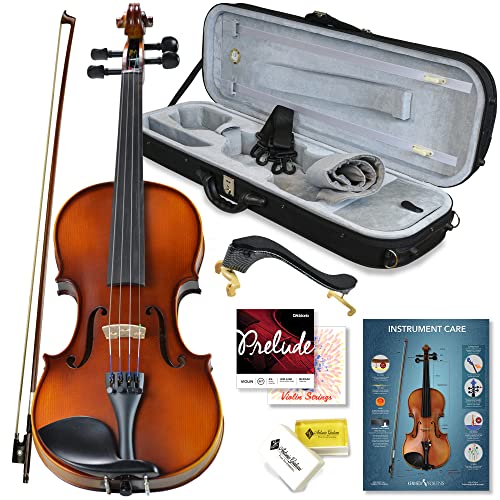
Kennedy Violins Pupil Violin Outfit
Hand-set-up in Kennedy Violins' US shop before shipping - the step-up outfit for committed students. Price has risen; it now sits in the premium bracket.
Pros
- Professional setup included
- Better quality fittings
- Improved sound
Cons
- Higher price point
- Still entry-level

Stentor Student I Violin Outfit
The school-program standard from the UK: properly set up, durable, and available in every fractional size. What many string teachers request by name.
Pros
- Teacher-recognized brand
- Proper setup out of the box
- All fractional sizes available
Cons
- Costs more than starter kits
- Case is basic

Eastar EVA-2 Violin Set
Complete violin outfit with everything a beginner needs. Available in sizes from 1/8 to 4/4 for all ages.
Pros
- Complete starter kit
- Multiple sizes available
- Includes case and bow
Cons
- May need professional setup
- Basic strings included

Cecilio CVN-300 Solidwood Ebony Fitted Violin
Solid spruce top with ebony fittings for improved tone. Complete outfit with hardshell case.
Pros
- Ebony fingerboard
- Hardshell case
- Better construction
Cons
- May still need setup
- Intermediate bow quality
Rent vs Buy
For violins, we strongly recommend renting for most families, especially if your child is under 10. Here's why:
- Children typically go through 3-4 violin sizes before reaching full size
- Quality rentals include maintenance and insurance
- Easy to exchange sizes as your child grows
- Most programs apply rental payments toward eventual purchase
- Lower risk if your child decides violin isn't for them
Use our Rent vs Buy Calculator →
Setup Matters
Even a good violin can be difficult to play if not properly setup. Budget violins from Amazon often arrive poorly setup. Key setup elements:
- Bridge position and height: Affects playability and tone
- String height (action): Too high makes it hard to press strings
- Pegs: Should turn smoothly for tuning
- Soundpost: Internal piece that affects tone
If buying online, consider paying for professional setup at a local violin shop (under $100). Many quality instruments include professional setup.
Violin Resources
Budget & Tools
We review it on its own too, in full detail: the Cecilio 4/4 violin outfit.
Sources
- Amazon.com product listings - prices, sizes and stock checked in 2026 through the Amazon Associates product API
- Eastar, Stentor, Kennedy Violins and Cecilio outfit specifications - sizes offered, tonewoods and what is included
- Standard arm-length sizing method - measure from the neck to the middle of the palm with the arm extended; confirm with a teacher
Frequently Asked Questions
What is the best violin for kids?
The Eastar EVA-2 outfit (under $200) is our pick for most kids: it comes in fractional and full sizes with a case, bow, rosin and shoulder rest. Choose the size by arm length before you choose the brand, and consider renting if your child is under 10.
Is a beginner violin for kids better rented or bought?
Rent for young children who will move up a size every year or two, because rentals include size exchanges. Buy once your child reaches 4/4 or you have a hand-me-down plan for the fractional sizes.
What is the best violin for a child beginner?
The Eastar EVA-2 (under $200) is the best value for most children: it comes in every fractional size and includes everything needed to start. If your child is taking lessons, the Stentor Student I (under $300) is the step-up teachers often request, and the Kennedy Violins Bunnel Pupil (under $500) arrives professionally set up.
What age can a child start violin?
Many Suzuki-method programs start children at 3 to 5 on tiny 1/16 or 1/10 violins; in school orchestra programs most children start around 8 to 10. The right time is when your child can focus for 10-15 minutes and has a teacher lined up.
What size violin does my child need?
Violin sizes are determined by arm length. Measure from neck to wrist with arm extended. Common sizes: 1/16-1/10 (ages 3-5), 1/8 (ages 4-5), 1/4 (ages 5-7), 1/2 (ages 7-9), 3/4 (ages 9-11), 4/4 full (ages 12+). A teacher or music shop can help with proper sizing.
What size violin for a 9 year old beginner?
Most 9-year-olds play a 1/2 size violin (arm length 20-22 inches); a taller 9 year old with a 22-23.5 inch arm fits a 3/4 size. Measure from the neck to the middle of the palm with the arm fully extended, and when the measurement sits on the line, choose the smaller size. The Eastar EVA-2 (under $200) is sold in both sizes.
What is a kid friendly violin?
A kid friendly violin is a fractional-size outfit (1/16 to 3/4) that arrives ready to play: pegs that turn smoothly, fine tuners on all four strings, a shoulder rest sized to the violin, and a lightweight case a child can carry. The Eastar EVA-2 (under $200) checks every box; the Stentor Student I (under $300) adds a better setup for children in lessons. Avoid violins under $60 with painted-on purfling and plastic pegs.
Should I rent or buy a beginner violin?
Renting is highly recommended for violins, especially for young children. Kids grow quickly and may need 3-4 different sizes before reaching full size. Rental programs typically include maintenance and allow easy size exchanges. Consider buying only after reaching full size or if rental costs exceed purchase price.
How much should I spend on a child's first violin?
For a playable beginner violin, expect to spend $80-150 for budget, $150-300 for mid-range, or $300-500 for quality student instruments. Avoid violins under $60 as they often have serious playability issues. Rental is often more cost-effective for growing children.
Not Sure Which Instrument?
Take our free 2-minute quiz and get a personalized recommendation based on your child's age, interests, and your budget.
Take the Free QuizFree, no email required